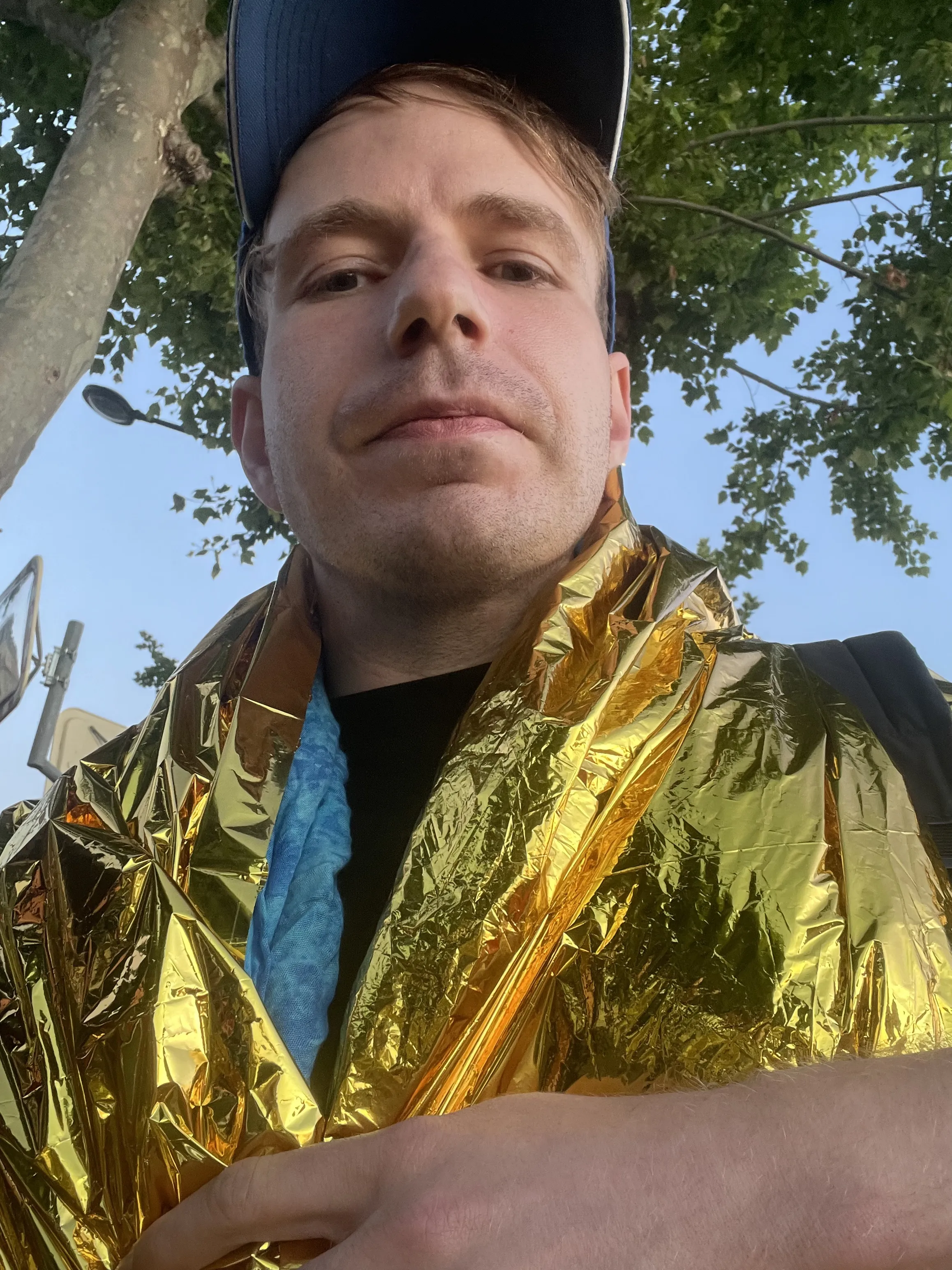
The demonstration draws a large crowd, and it’s heartening to see. But all along the route, the police presence is heavy and tear gas is fired repeatedly. The march is coming to an end. After hours of walking in the heat, my friend and I mainly want to sit down for a while by the lake, and we head to the Parc Mon Repos, which we think is safe.
The police gas the entrance to the park as we go in, without our hearing any order. We see no officers inside, and we have no idea what has become of the march, except that it is no longer moving. To be safe, here we are at the Perle du Lac, a little back from the heart of Mon Repos.
We see the refreshment stand at La Chaloupe à Vapeur and people sitting on the grass. Most seem to simply be enjoying their Sunday. Some look like they’ve come from the demonstration. Small groups everywhere.
We grab something to drink at the refreshment stand and settle down by the water. For us, the demonstration is over and the police seem to have returned to their quarters.
From our position, I count 23 officers crossing the park, visibly getting ready to leave. It has been about an hour, maybe more, since we last saw any police around us.
About 43 officers leave the park, soon followed by 21 more. They head in the same direction as the first group; it looks like they are leaving too.
It all seems over, we stay there.
Police officers reappear behind the trees and form a line.
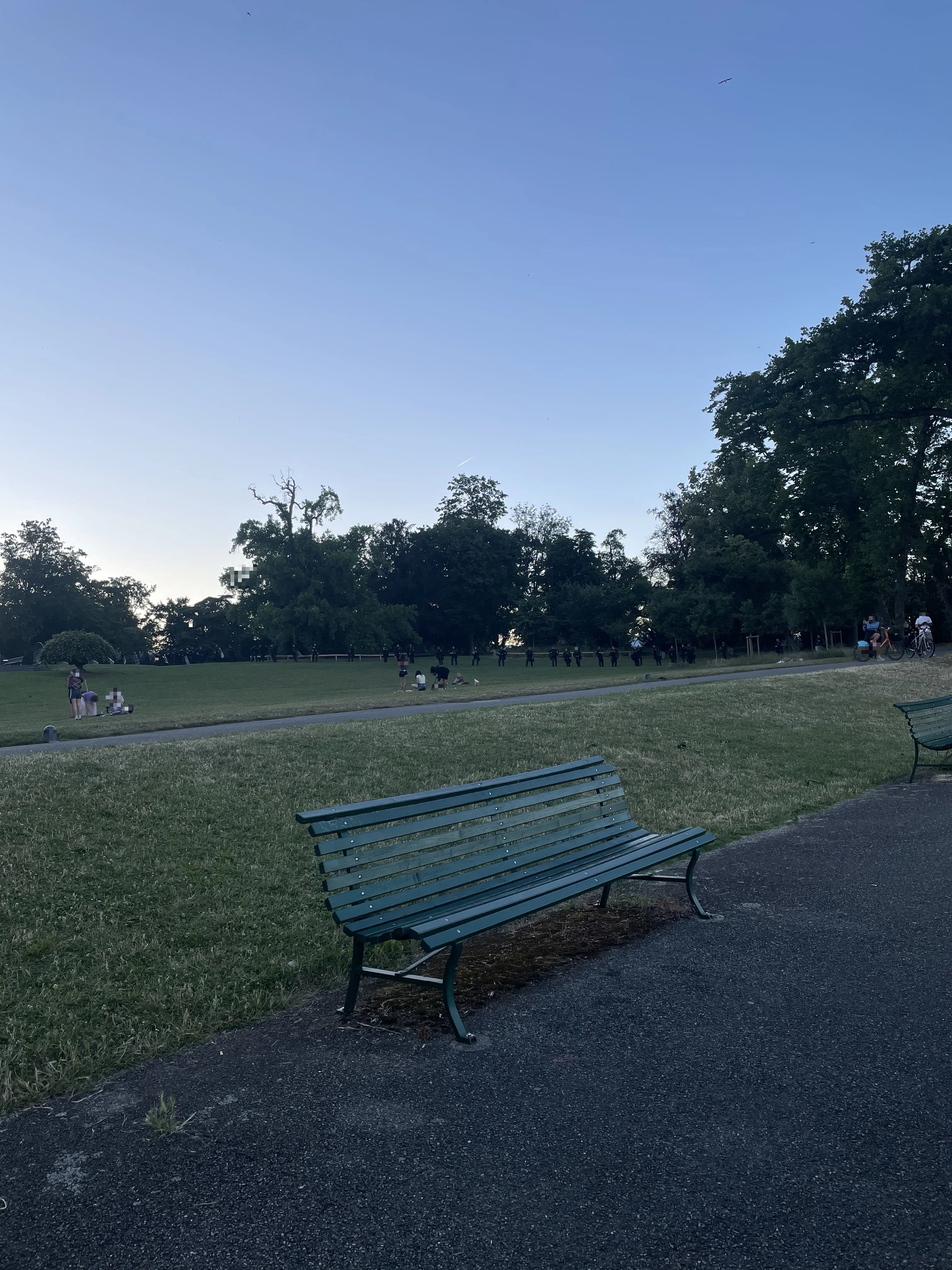
They advance in a line and force us to move ahead of them.
We follow the path that runs along the lake, toward the quai Wilson. We think they are clearing the whole park.
The police officers make us walk straight ahead, down a long corridor formed by their lines. As we pass, people ask us in English where to go.
We assume this is the area they had cleared, based on the lines we saw.
We come out onto the quai Wilson. Another police line is waiting for us there and refuses to let us pass.
The TAP (the self-protection unit) forms a human cordon. Part of the crowd gathers behind it, while others stay outside, looking for a way out. The situation remains confused, with no clear instruction from the police.
We ask an officer on the line what is happening. He only replies that an exit will be organized, without specifying anything else, neither the delay, nor the identity check awaiting us, nor why we cannot leave.
Meanwhile, they close the perimeter right up to the foot of the trees. We are completely encircled.
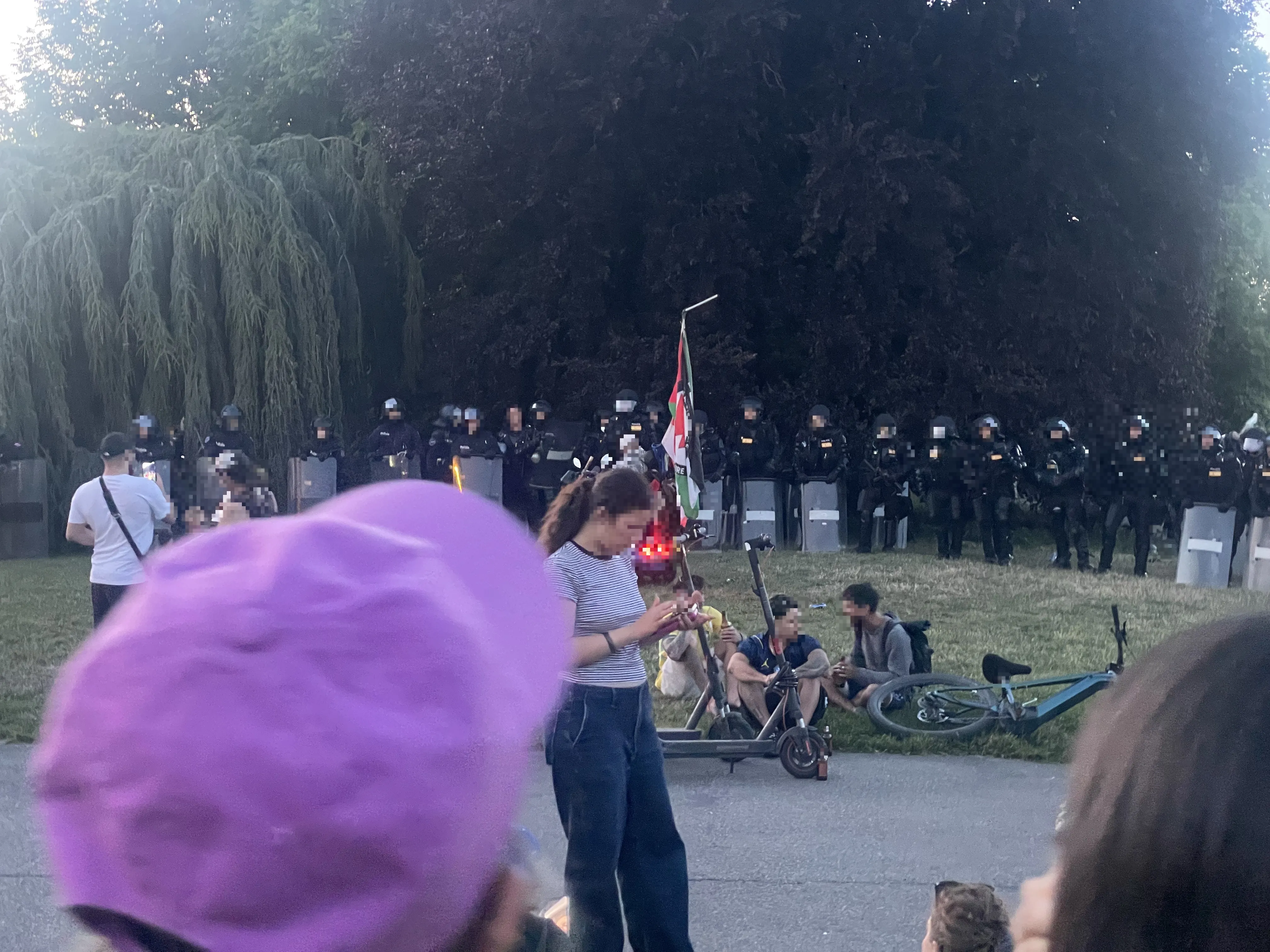
I notice a second line of police, on the other side.
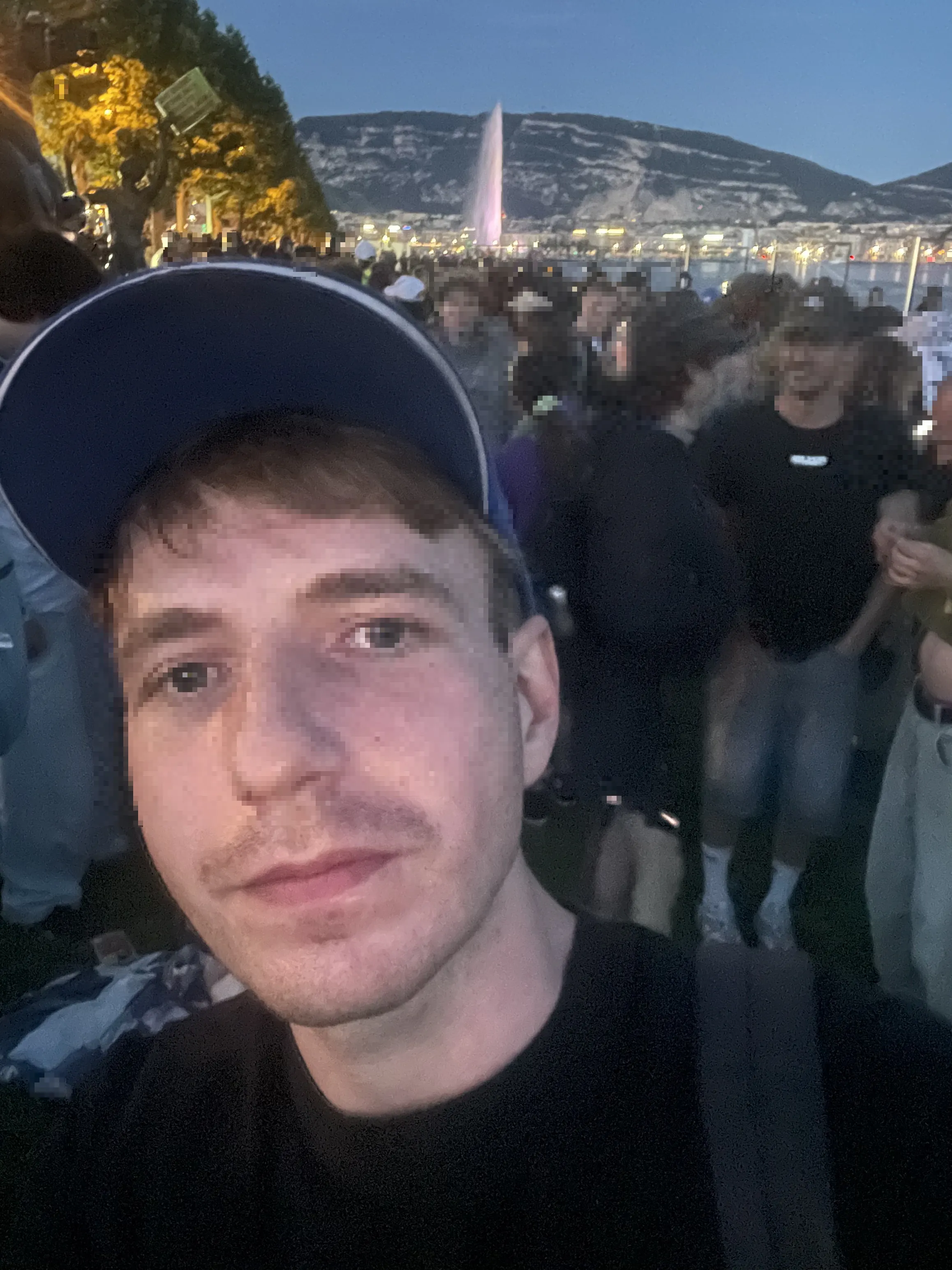
With no other option, people improvise a makeshift toilet corner along the flower bed, between the sidewalk and the lawn, and hang up a cloth for a bit of privacy.
We don’t realize it yet, but this is the whole zone we won’t be able to leave until morning.
Here is everything I filmed and photographed that night. Geolocating these files allowed me to retrace its lines, as best I could.
We hear that they’re starting by letting the minors out, over by the exit. Nothing seems to be moving. In good spirits despite it all, my friend and I do a few stretches. Others join us, including a flautist who had been playing nearby.
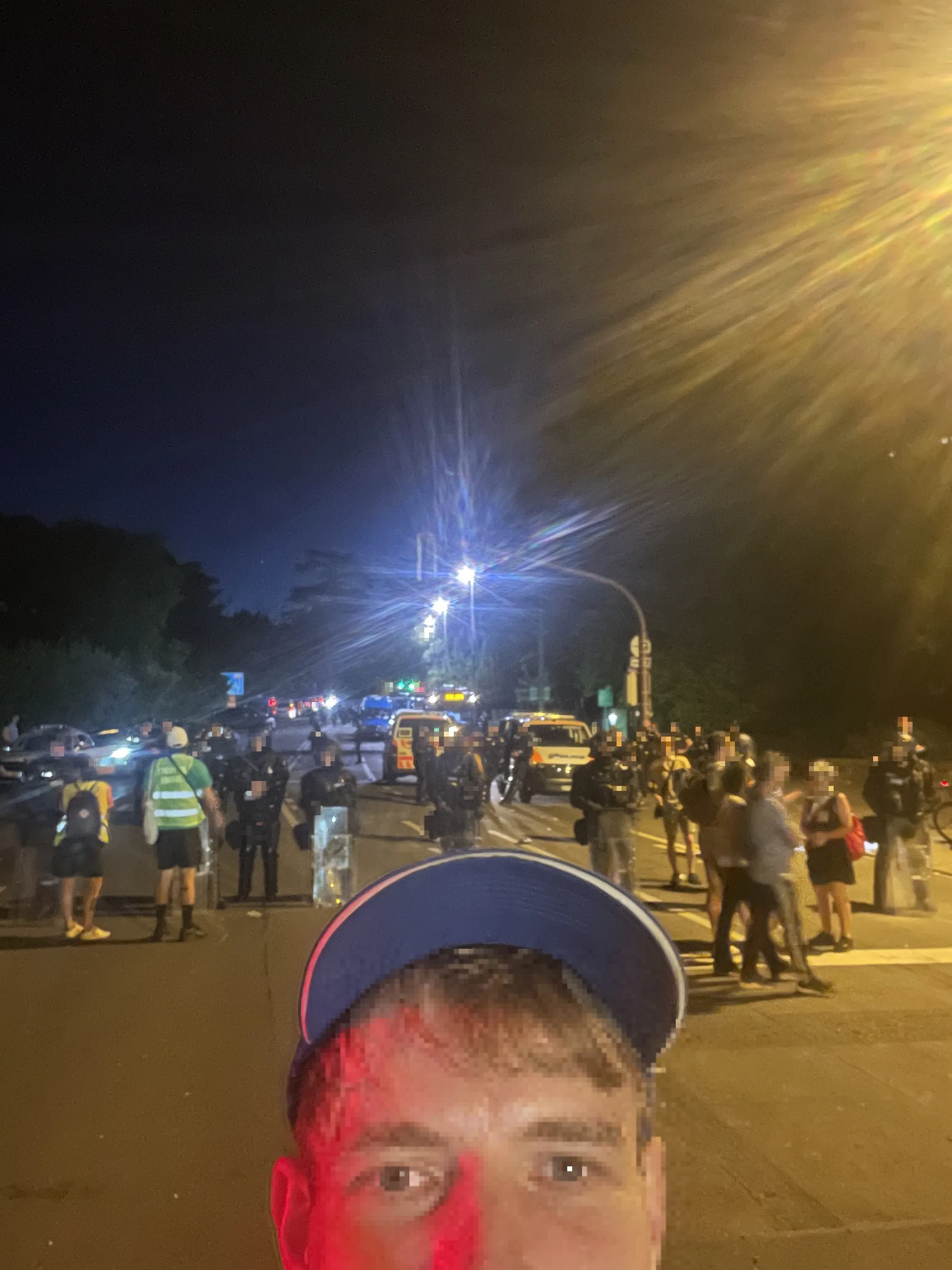
The wait drags on and I read up on this kind of encirclement. I learn that the central criterion is proportionality, and that such a measure must respond to a real justification. We do not see it, and after so many hours, it should at least be communicated to us.
Around us, almost no one grasps why they are here. Tourists, passers-by, staff from the nearby refreshment stand share the same fate. There are also elderly people, cyclists by the dozen, and swimmers, one of them in red swimming trunks who does not go unnoticed.
A new improvised toilet corner takes shape. A tree for the men, a small monument for the women, who take turns one by one under the gaze of the police.
At midnight, people start to sing. Happy birthday, for the flute player.
The police put out an announcement, which a member of the TAP relays by shouting it. Minors, the sick and the injured are let out. For the others, the identity checks will be done three at a time.
For the first time, we see them bringing water bottles. Shortly after, they start handing them out.
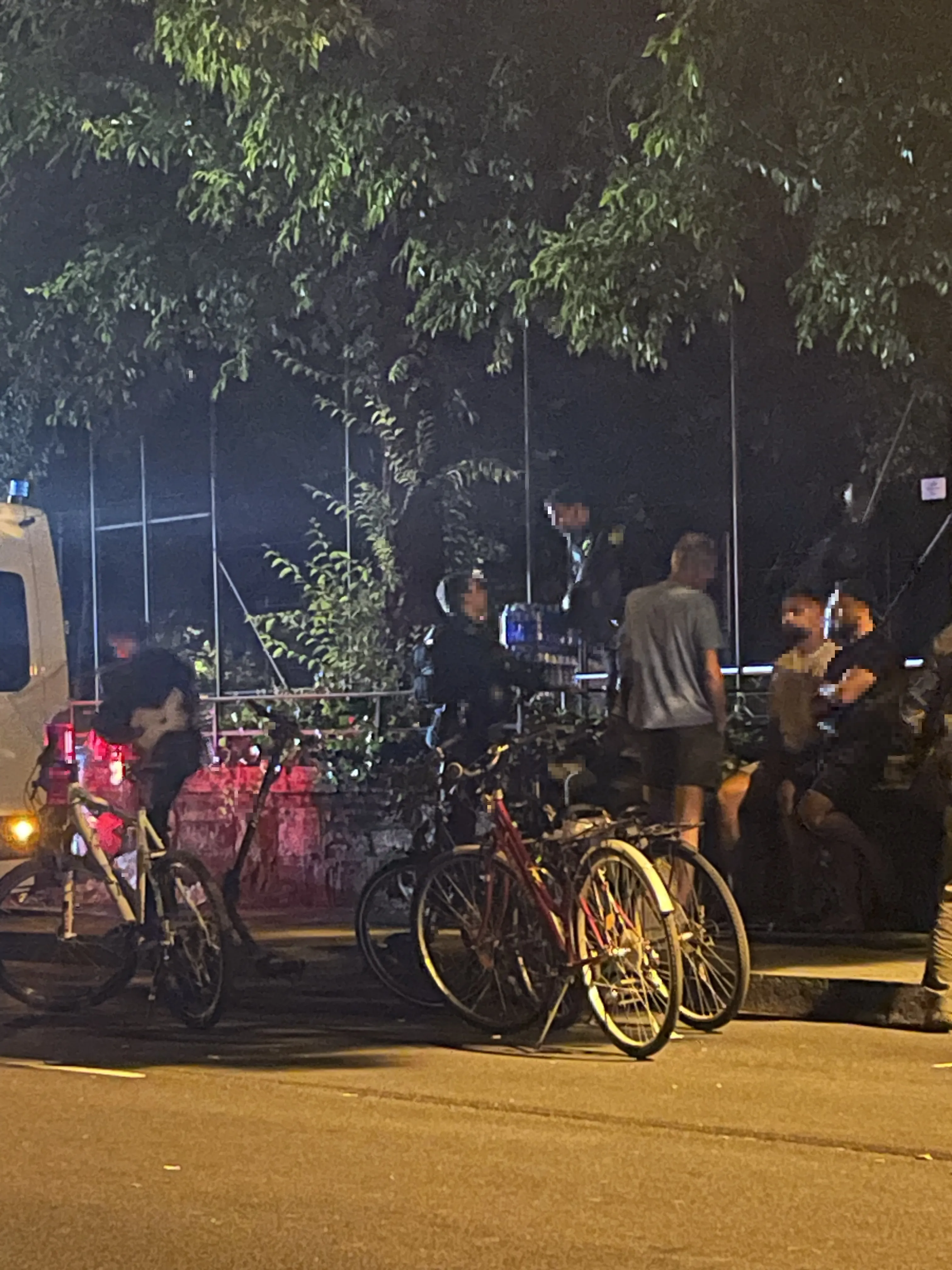
After hours of waiting, we still don’t know on what basis we’re being held. No one comes to tell us, so we go to the nearest police officer. He can’t answer and tells us to ask someone else, without pointing to any specific person.
We turn to the officers handing out water. One of them, a German-speaking Swiss, answers us. The decision rests with the Geneva police, he says. Neither the duration nor the precise reason does he know, or say.
Over by the exit, we hear that the checks are starting, as announced about forty minutes earlier, and that people are being let out three at a time once their identity has been verified.
Near the exit, people begin to gather. In the distance, in the photo, you can make out the red tents where each person’s identity is checked and photographed. We hope to be done soon, but it moves only at a trickle.
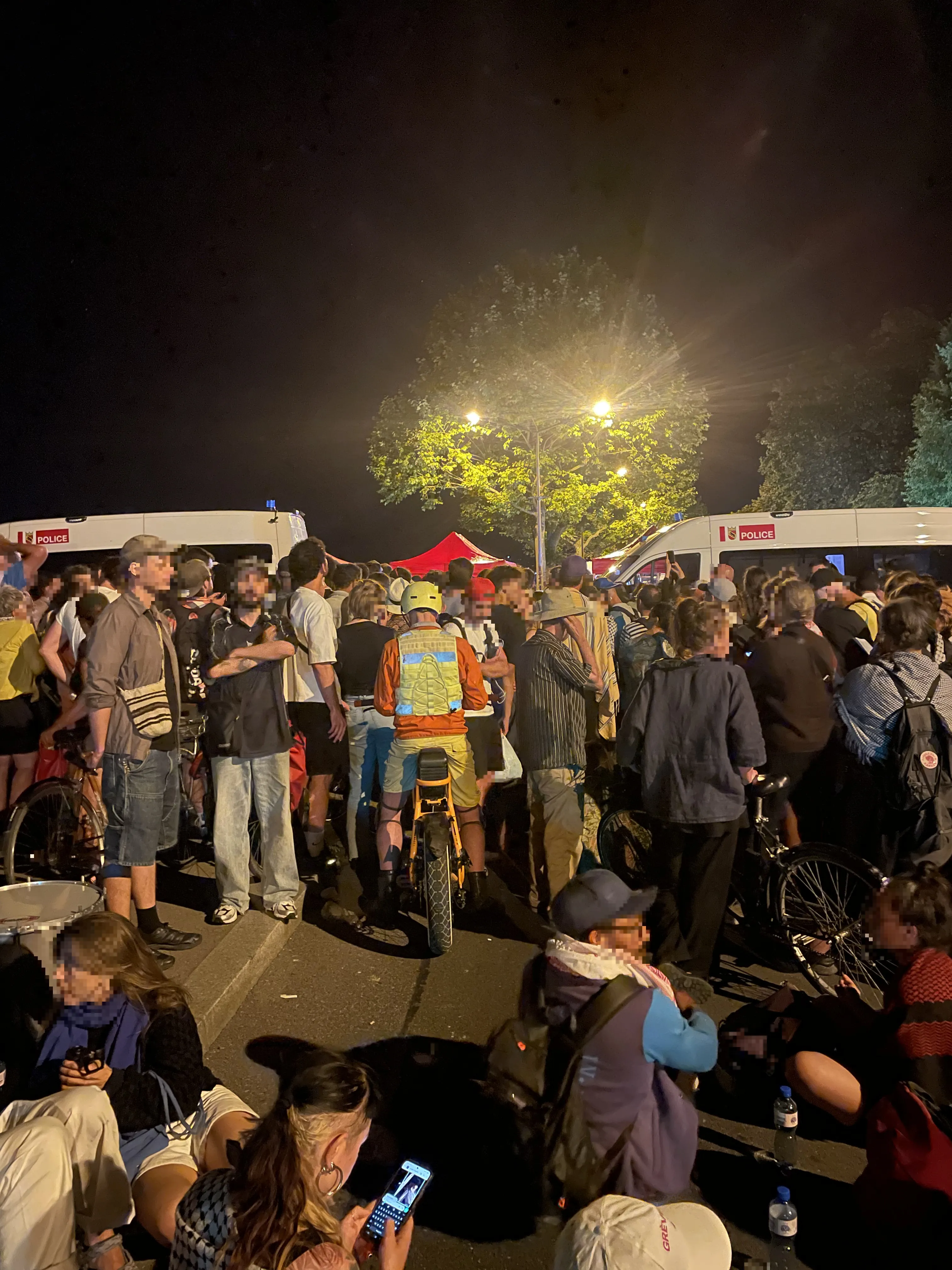
A few emergency blankets were handed out, too few for everyone. Meanwhile the perimeter had tightened, marked out on the asphalt by a line of police vans visible in the video.
At this late hour of the night, everything suggests we will stay here until morning.
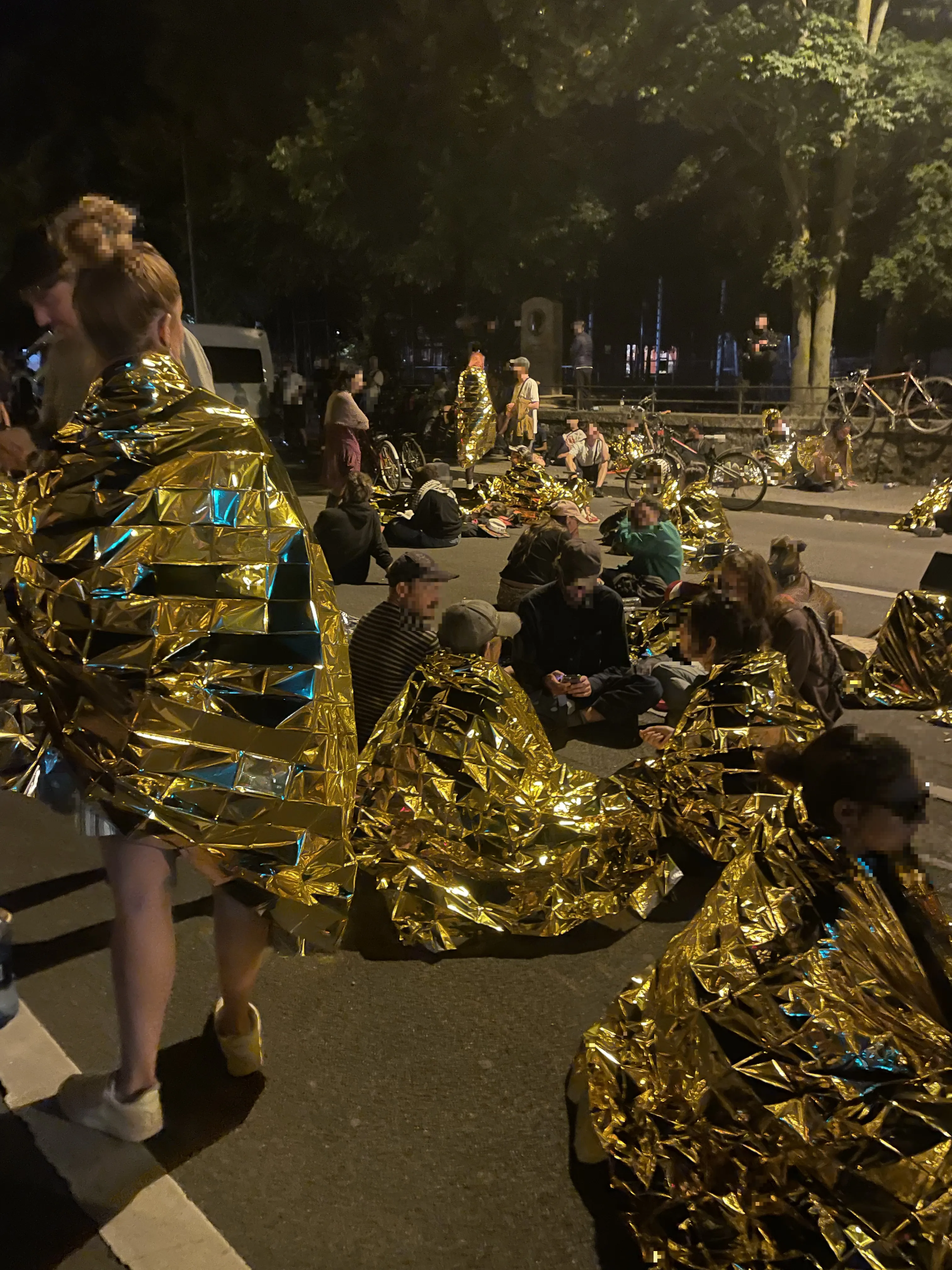
An elderly woman is lying on the ground, with no emergency blanket. It is cold.
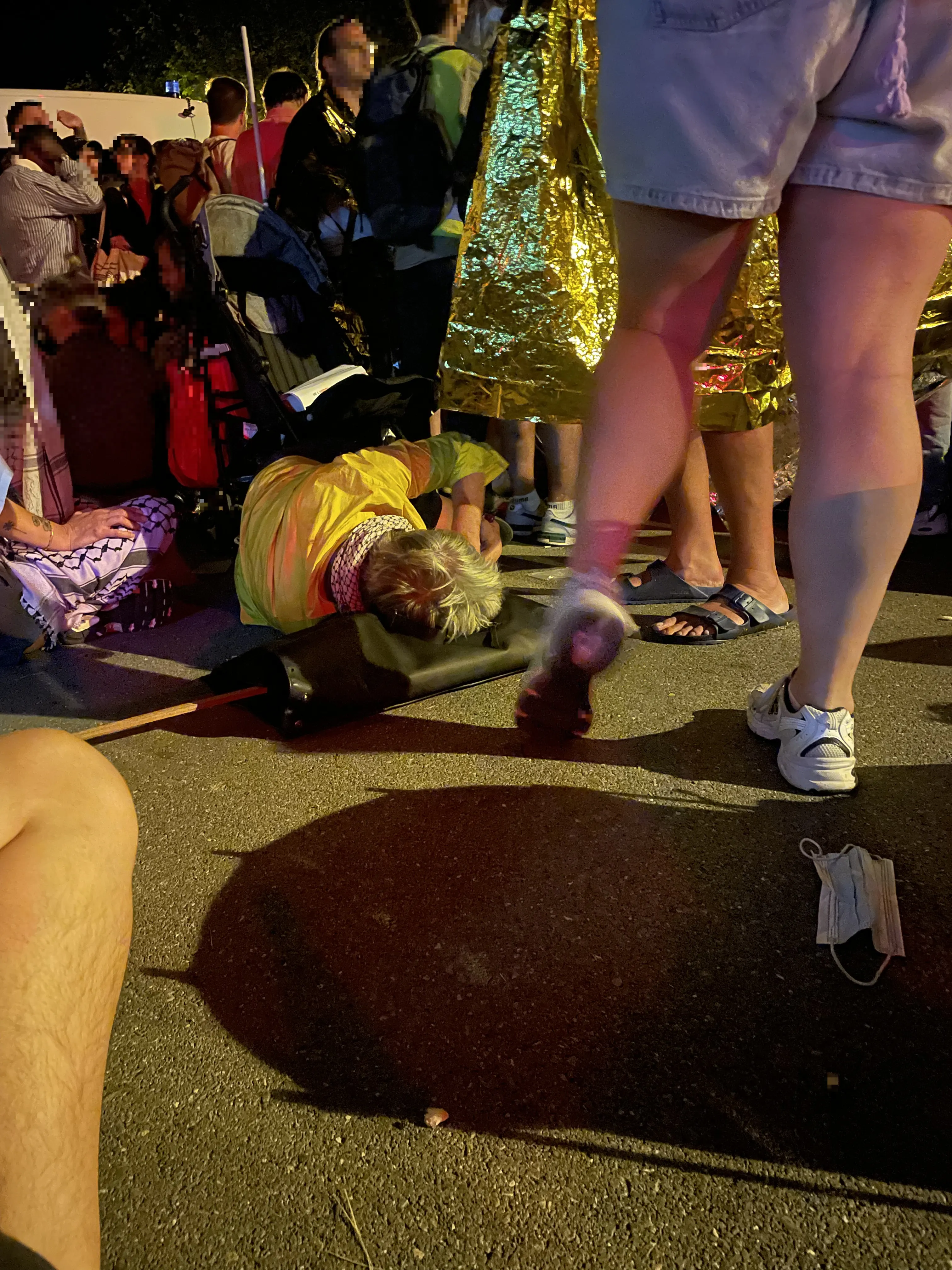
There are still people without a survival blanket, us included. We don’t know whether more will arrive. The people who leave are leaving their own behind.
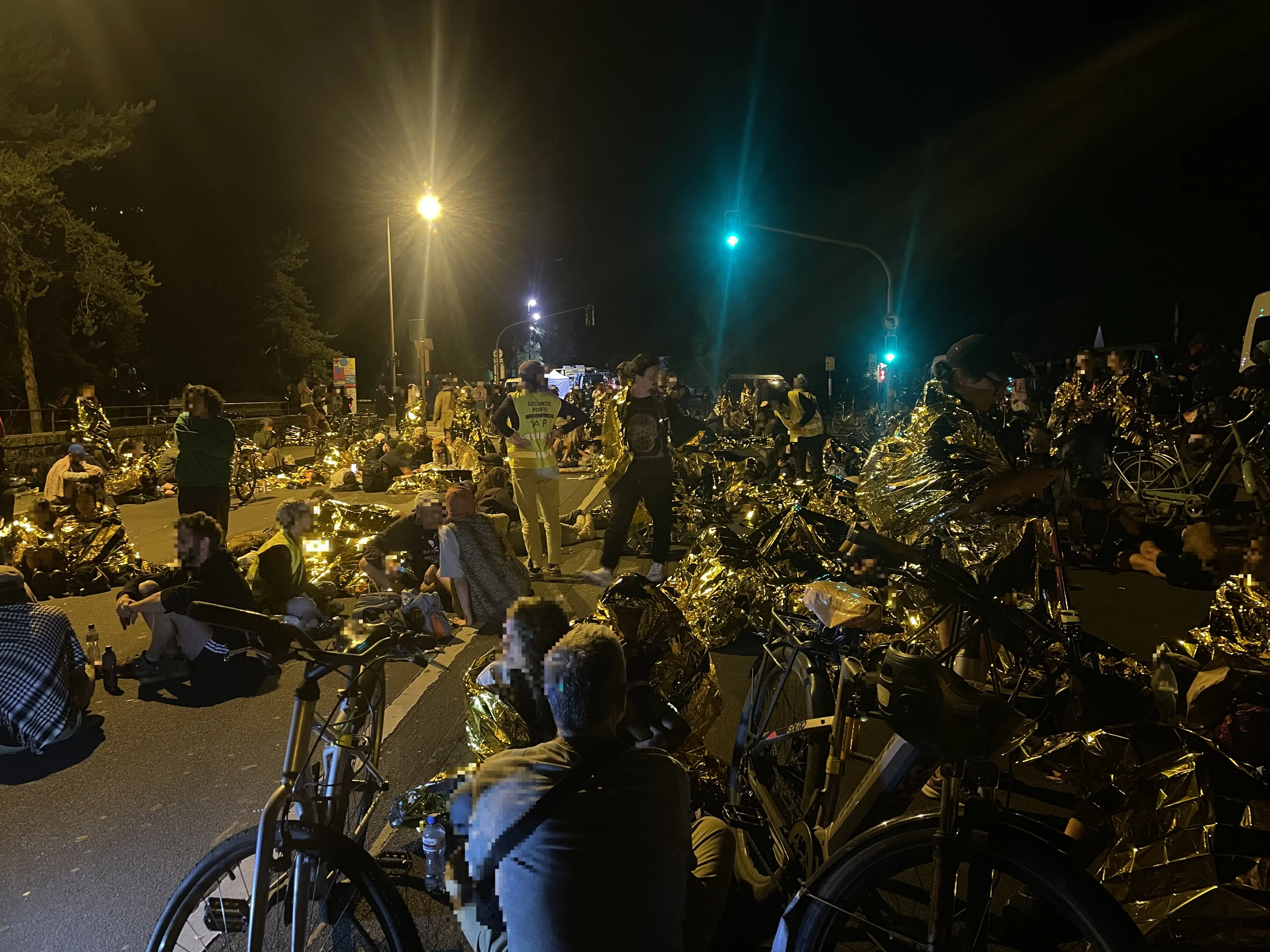
Another batch arrived, and we got our emergency blankets by asking for them.
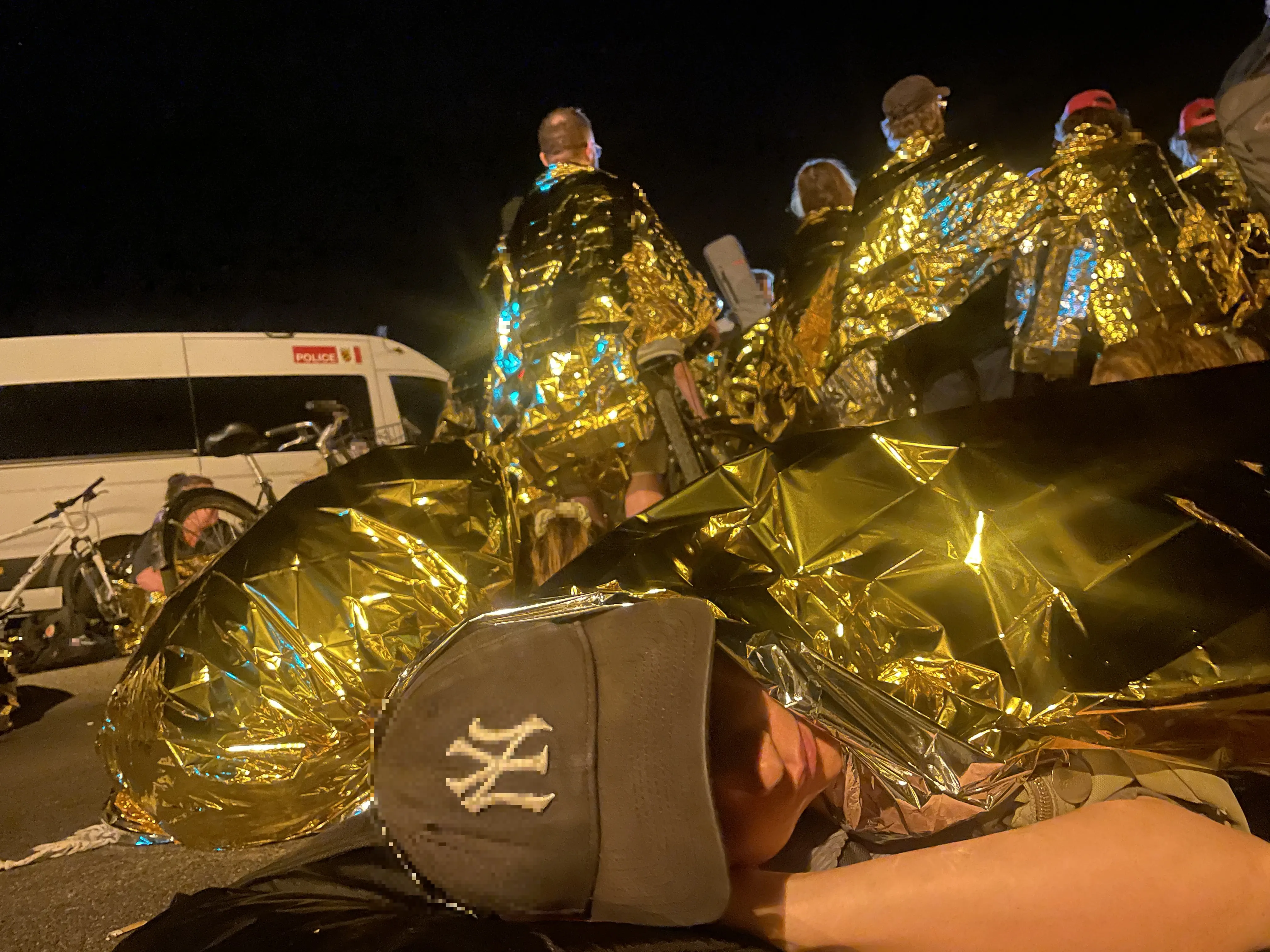
The sun rises between the police vans. A few people have gone out ahead of us. The tarmac is barely warm beneath us, and the wait goes on.
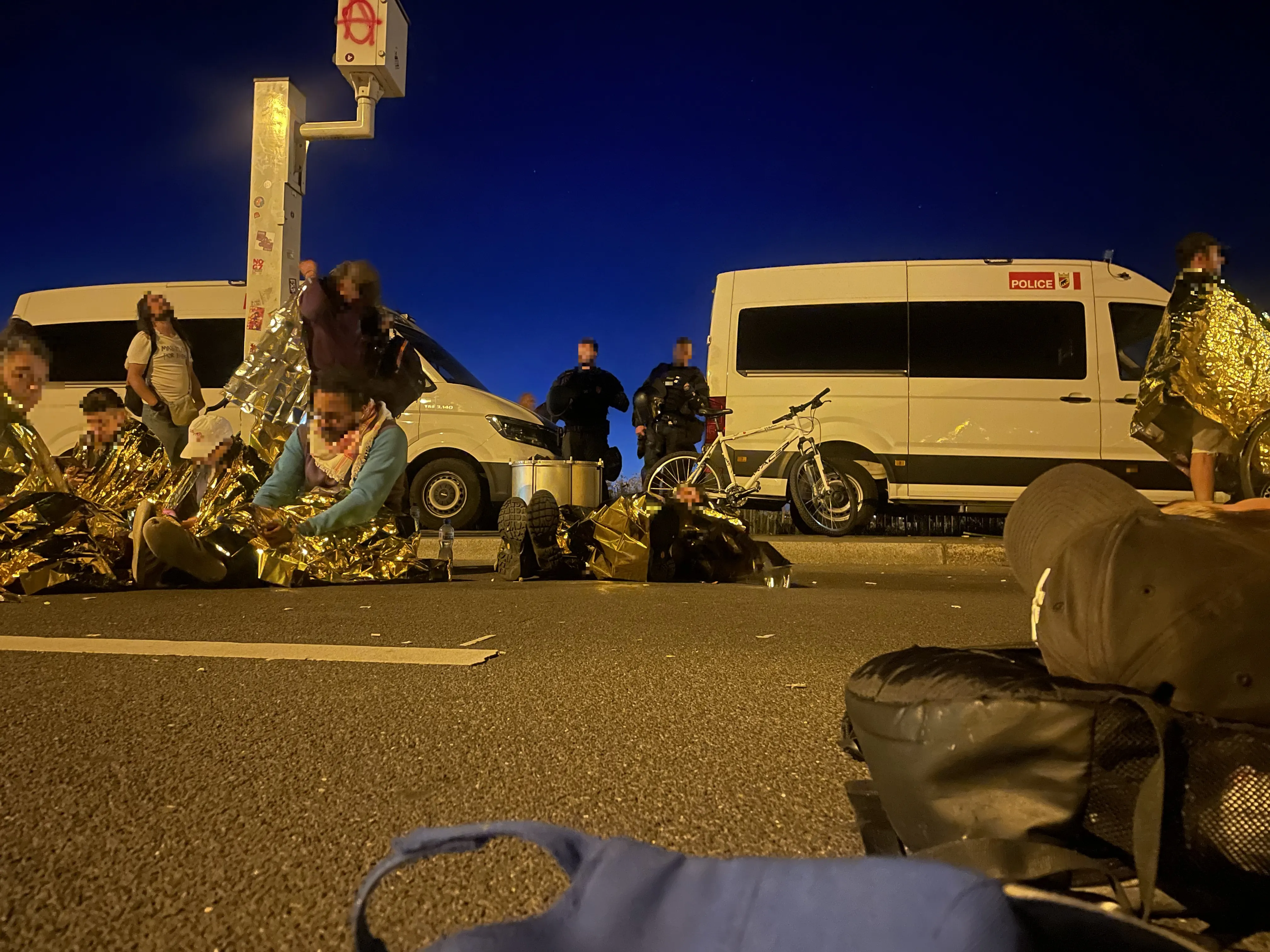
Lying on the asphalt, we watch the line move forward, as slowly as ever.
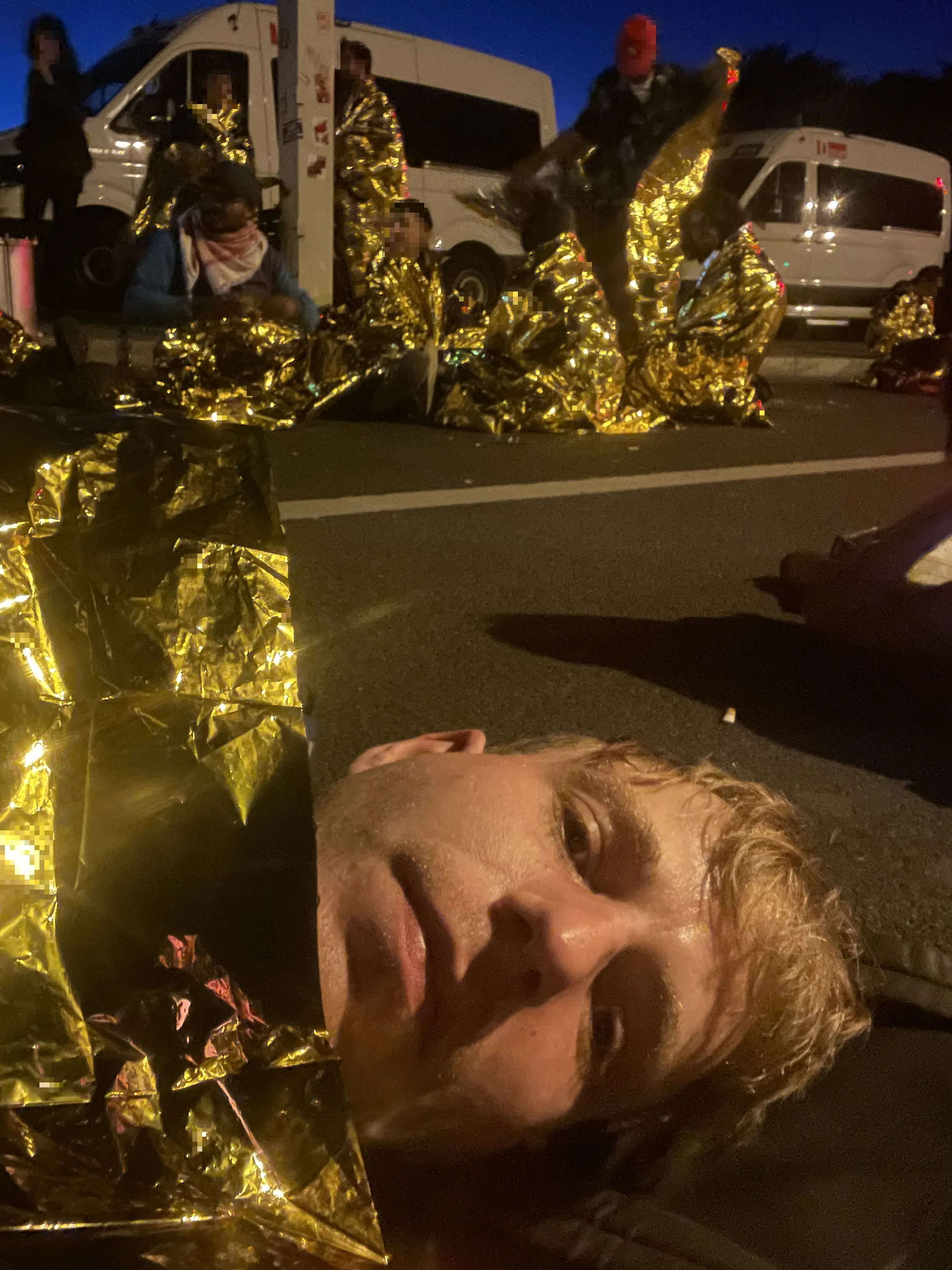
As day breaks, the queue moves a little faster, and we soon join it.
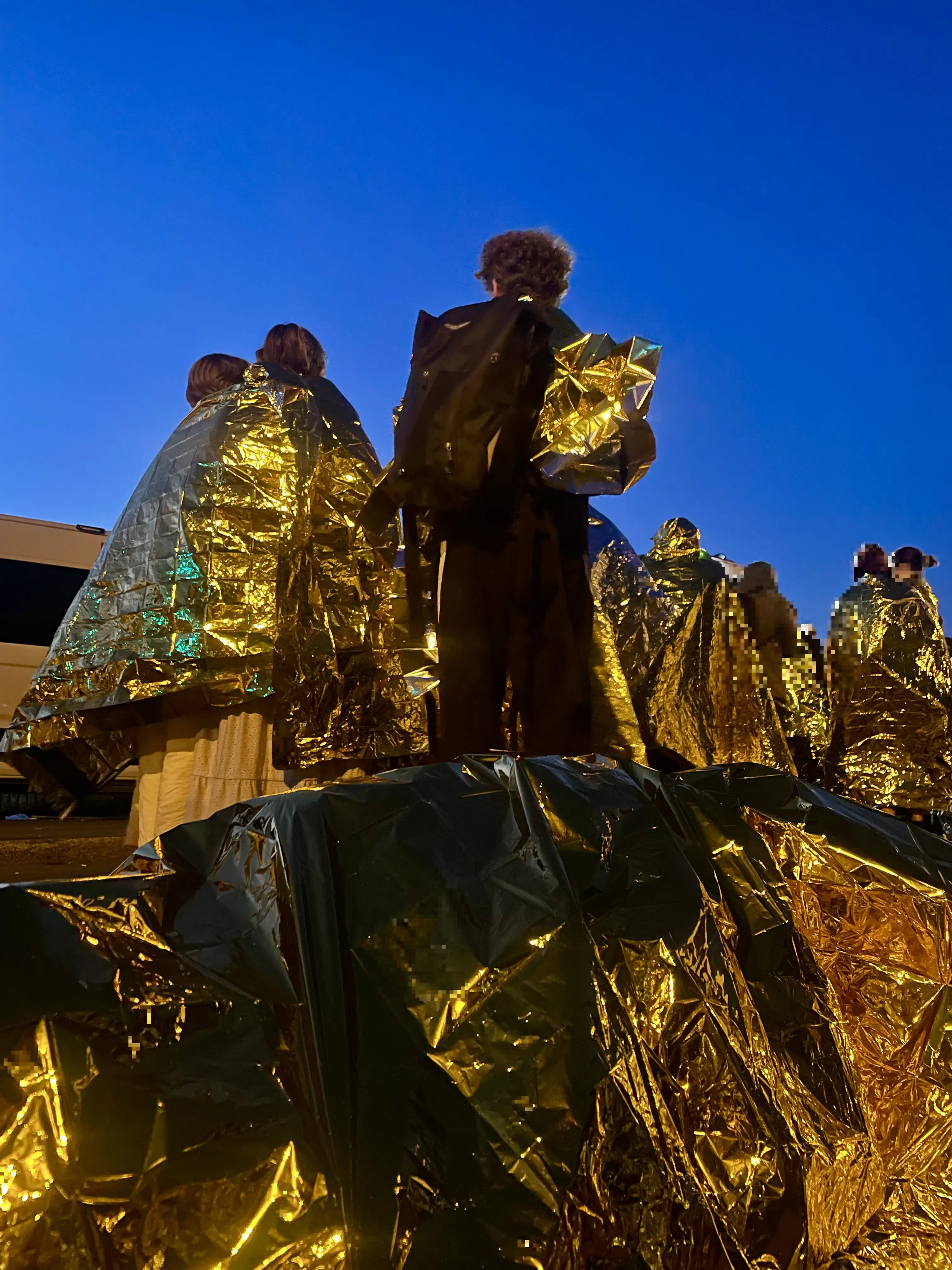
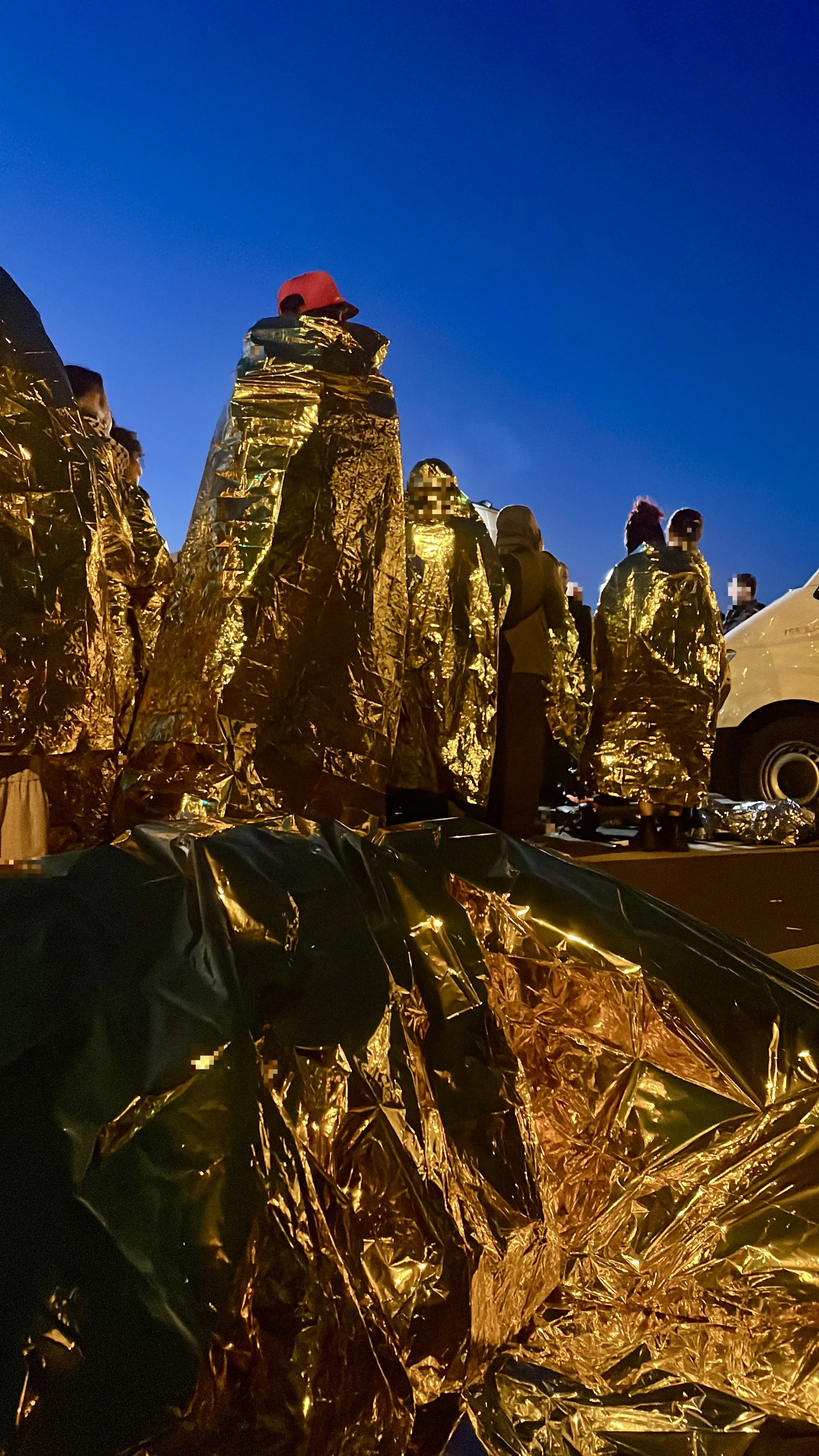
The checks went faster than before. They searched my bag, I showed my passport, they filled out a form and took my photo, without a single question. Someone asked why we had been held all night. Because we were “in the middle of a demonstration,” a police officer replied. As we left, people were still being held.